Supporting the creation of urban agencies abroad
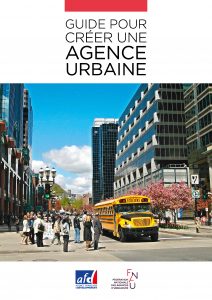
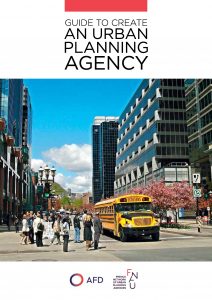
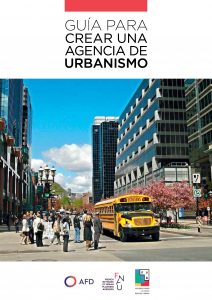
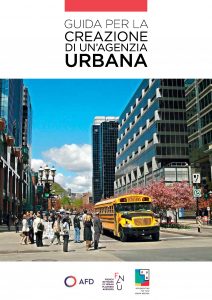
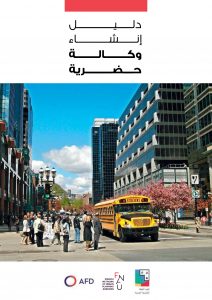
Urban engineering tools are needed to implement the new urban agenda promoting inclusive, safe, resilient and sustainable cities. Urban agencies, halfway between the technical and political worlds, offer original solutions for intelligent, integrated planning. In partnership with the Agence Française de Développement, the Fnau has published a guide to setting up urban planning agencies, translated into five languages:
- Guide pour la création d’une agence d’urbanisme – version en français FR
- Guide for the creation of an urban planning agency – english version EN
- Guia para crear una agencia de urbanismo – versión en español ES
- Guida per la creazione di un’agenzia urbana – versione in italiano IT
- arabic version AR – دليل إنشاء وكالة حضرية
Sustainable housing and urban development workshop

Faced with the dual global crises of housing affordability and climate change, Africa appears to be one of the most vulnerable regions due to its rapid population growth. The major challenges relate to land speculation, which is increasingly excluding residents, the need to develop truly affordable and suitable housing, and the urgent need to promote sustainable, carbon-free solutions inspired by vernacular practices.
Year of publication: 2025
The 6th Climate Chance Africa summit, held in Cotonou in November 2025, focused on the resilience of African cities to the growing impacts of climate change, following on from the discussions at the 12th World Urban Forum. Participants highlighted the richness and relevance of African knowledge and practices in the field of adaptation, while emphasizing the central role of local actors—local authorities, town halls, community organizations—whose concrete actions, rooted in the realities on the ground, are an essential lever for strengthening urban resilience.
Towards sustainable and resilient African cities workshop
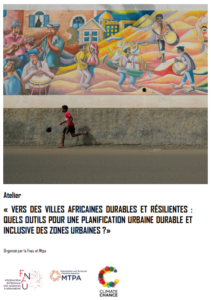
Adaptation, often overlooked in the face of mitigation, is emerging as a key issue in reshaping the way we live in the face of extreme climatic conditions. Although Paris is working hard to cope with peaks of 50°C, the climate of African cities makes them even more vulnerable.
Year of publication: 2023
The Climate Chance summit is also laying the foundations for UN Habitat’s 12th World Urban Forum, scheduled for November 2024 in Egypt, with a particular focus on habitat issues. An essential approach to meeting these adaptation challenges is to deal with what is already there, an approach that is often underestimated. For African cities, this means prioritising informal settlements and responding to architectural challenges by using bioclimatic techniques and natural ventilation practices, drawing on local know-how. Finally, it also means working with public spaces, which offer solutions for mitigating the effects of global warming, thanks to their capacity for green design and the use of water. It is vital to remember that housing is a major vector for social inclusion. To ensure that no-one is left behind, a commitment to resilience is essential if we are to transform our cities and the way we live in them. Often overlooked in urban planning policies linked to adaptation, informal settlements deserve a place in these discussions.